The Journey of Excellence Begins Here
- Posted by أ. مصطفى وصَّال
- Categories Arabic
- Date September 1, 2025
- Comments 0 comment
AL Tasis Al Motakamil is a comprehensive program that integrates Arabic language instruction and Qur’anic reading using a modern, interactive approach that suits learners of all ages and levels. Learn about its objectives, content, and why it is the top choice for building a strong linguistic foundation.
AL Tasis Al Motakamil
All praise is due to Allah, Lord of the Worlds, and may peace and blessings be upon our Prophet Muhammad, his family, and his companions.
The Arabic language is the language of the Holy Qur’an and the noble Hadith. Serving and promoting it is a great honor, as it is the bird that carries religion on its wings and spreads it throughout the universe.
Learning Arabic is like constructing a magnificent palace — it must be built upon a solid foundation. From this perspective, AL Tasis Al Motakamil was developed to be the cornerstone of this linguistic and educational structure.
What is AL Tasis Al Motakamil?
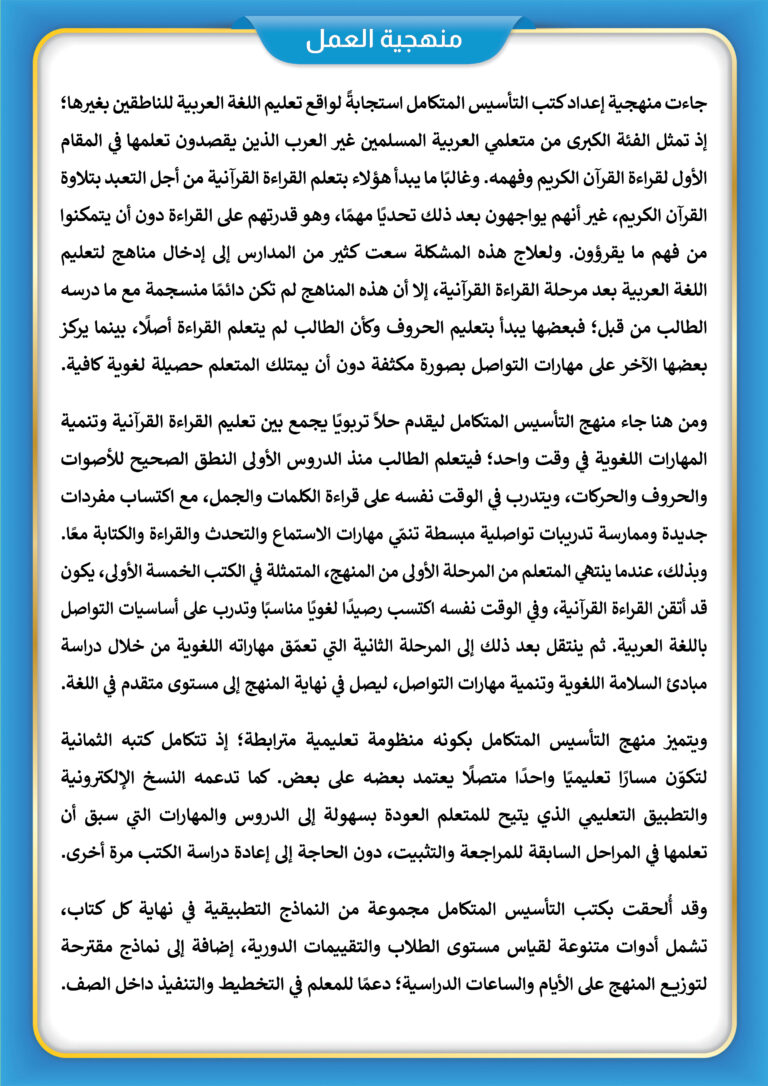
AL Tasis Al Motakamil is a user-friendly, integrated curriculum consisting of seven carefully prepared books. It follows a unique methodology that combines Arabic language learning with Qur’anic education in an interactive, modern style suitable for both children and adults — whether native Arabic speakers or non-native learners.
This methodology helps develop and strengthen the core language skills: listening, speaking, reading, and writing, in a practical and gradual manner. It relies on interactive exercises, visual illustrations, and both oral and written applications. This approach enriches vocabulary, addresses spelling and pronunciation issues, and leads to fluent reading.
The curriculum also includes intensive exercises to train the jaws and correct speech patterns, helping learners master proper articulation and distinguish between similar sounds in an innovative, hands-on way — essential for accurate Qur’anic recitation.
AL Tasis Al Motakamil has been designed to suit both native and non-native Arabic speakers of all ages and skill levels. Its skill progression supports struggling learners, uplifts advanced students and creative minds, and makes teaching easier for non-specialists.
To further support ease, precision, and mastery, the entire content is also available via an interactive mobile application and digital books — making the learning experience enjoyable, accessible, and adaptable for all types of learners, in both in-person and online learning environments.
Facilitate Arabic and Qur’an education using interactive tools and teaching strategies, increasing learner engagement and easing the educator’s role.
Teach all four language skills: listening, speaking, reading, and writing.
Enable accurate Qur’anic recitation by mastering the articulation and characteristics of letters, and understanding Tajweed rules both practically and theoretically.
Achieve fluent reading of both vowelized and unvowelized Arabic texts.
Build a rich vocabulary base that helps learners understand meanings and master language skills.
All lessons, rules, and skills necessary to learn Arabic and the Qur’an.
The most essential and commonly used Arabic vocabulary.
Interactive skills and a variety of exercises for all topics.
A mobile application for phonetic practice, language games, and vocabulary reinforcement.
Digital versions of the books, allowing teachers to present lessons through smart boards, projectors, screens, or online platforms.
Training courses to prepare teachers and instructors in AL Tasis Al Motakamil.
A comprehensive website offering full educational services.
The AL Tasis Al Motakamil curriculum is a comprehensive and accessible program that includes advanced skills presented in a simplified way.
Individual Differences Considered: The curriculum begins with a placement test to determine each learner’s level.
Arabic as the Primary Language of Instruction: Communication is conducted in Arabic, supported by body language, sign language, and visual aids. The clarity of how skills are presented within the books enables teachers to communicate effectively with learners without relying on a second language.
Interactive Approach to Teaching Language Skills: Achieved through three main methods:
The teacher’s active role in presenting skills, reading, and engaging students in role-switching during repetition.
Interactive exercises embedded in the books and mobile app.
Organizing regular language contests and competitive activities to reinforce taught skills.
Use of Chanting and Repetition: For teaching phonetic skills, enhancing memorization and correct pronunciation.
Ongoing Review: Constant review of previously covered skills, whether within the same book or across previous levels. The curriculum is treated as an interconnected series, and full benefit is only realized upon completing all levels.
Content Simplification and Structuring: Designed to accommodate learners with attention deficit or concentration difficulties.
Differentiation Between Native and Non-Native Learners:
For native speakers: The teacher explains the meanings of words, phrases, and sentences, and provides visual and contextual understanding.
For non-native speakers: Instruction focuses on vocabulary supported by illustrative images and common communicative terms.
From level six onwards, meanings of expressions and vocabulary from previous and upcoming lessons are gradually introduced to non-native learners.
Note: Developing language skills is not possible without addressing concentration and attention challenges. Reading difficulties are often associated with mental distraction.
First Stage:
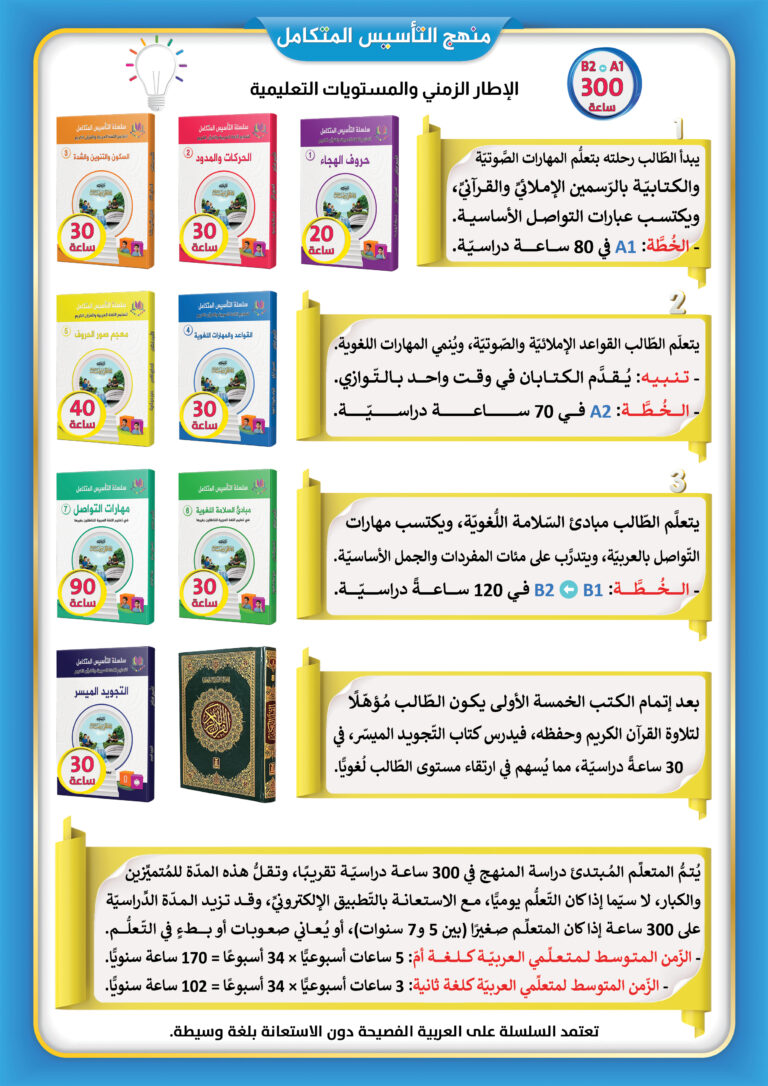
In this stage, the learner develops foundational skills in listening and speaking, as well as gains full proficiency in reading and writing. This is achieved through the first five levels of the curriculum:
Alphabet Book
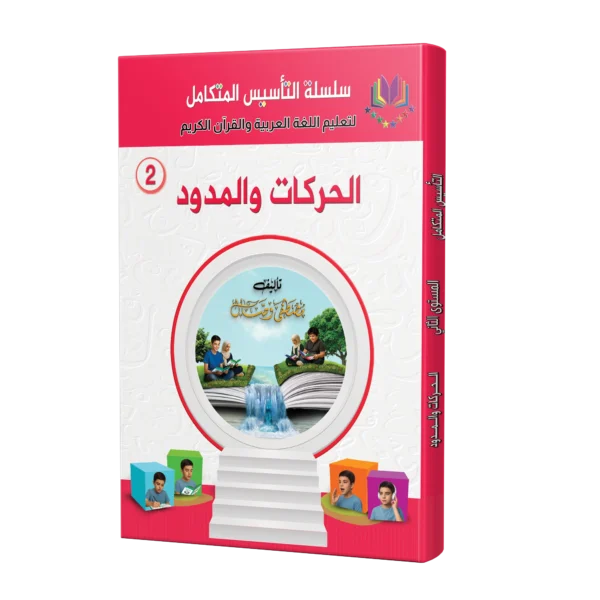
Harakat and Madd Book
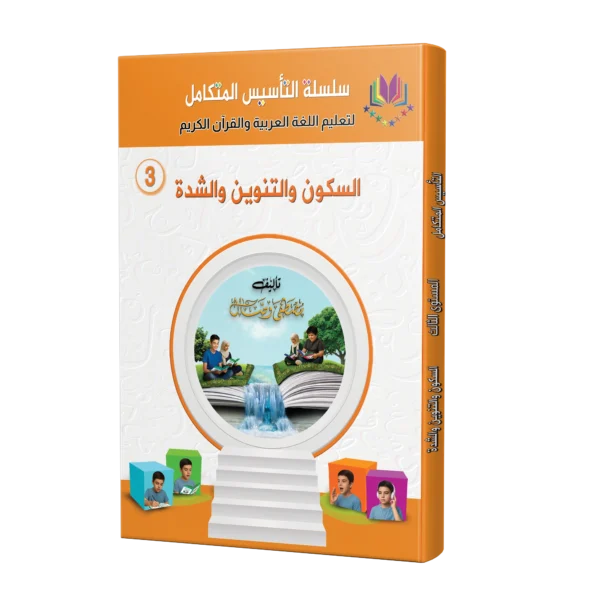
Sukoon, Tanween, and Shaddah Book
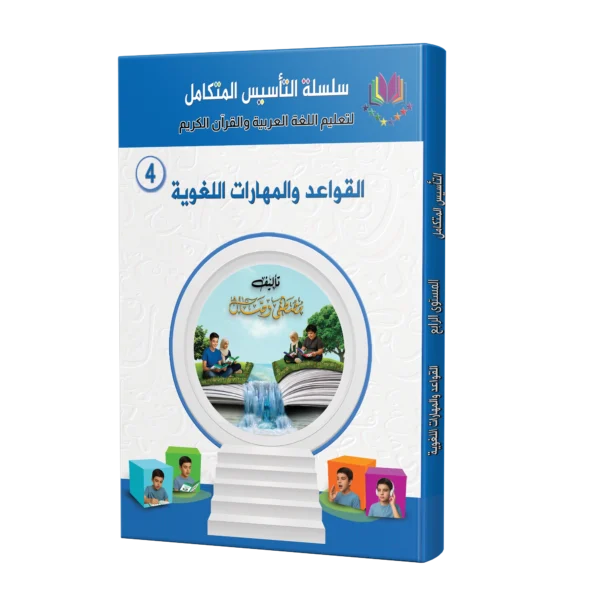
Grammar and Language Skills Book
Illustrated Dictionary Book
During this phase, learners build a strong vocabulary base by engaging with the curriculum and communicating with their teachers throughout the learning process. This foundational vocabulary significantly supports their listening, speaking, reading, and writing skills and prepares them for the second stage, which is based on language immersion. At this point, learners can also begin memorizing the Qur’an concurrently.
Second Stage:
This stage focuses on application and communication, enabling the learner to:
Acquire new vocabulary
Review and reinforce previous phrases and sentence structures
Learn the principles of effective communication
Master the rules of Qur’anic recitation (Tajweed)
Sharpen all four core language skills through immersion and completion of the final three books:
Communicating in Arabic Book
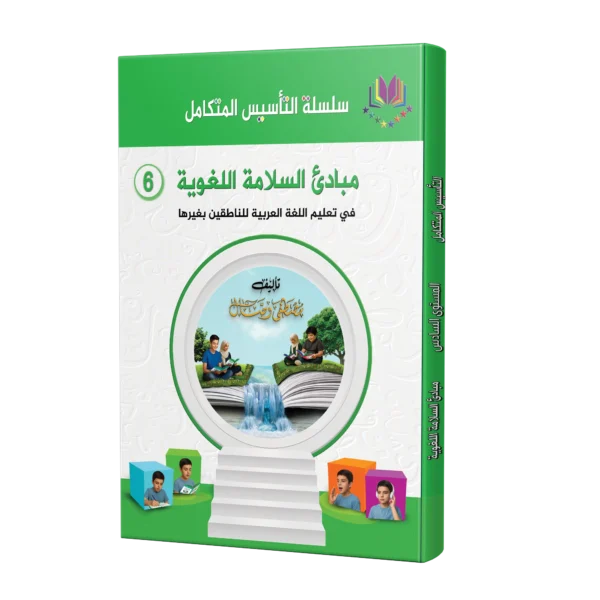
Fundamentals of Linguistic Accuracy Book
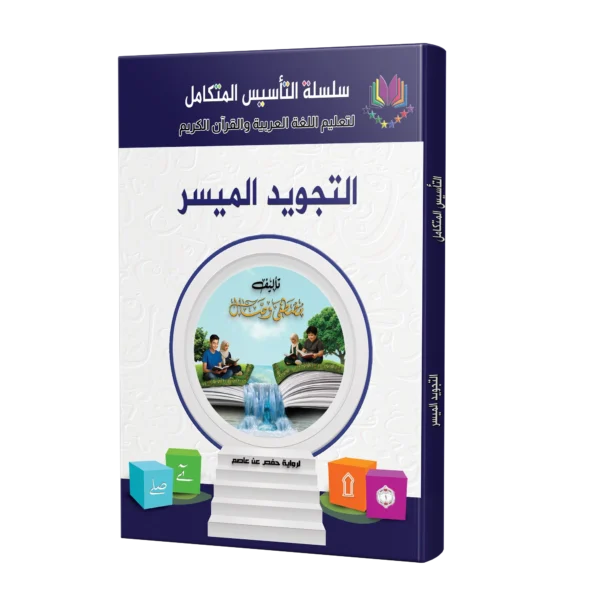
Simplified Tajweed Book
💡 Frequently Asked Questions (FAQs)
This is precisely what we provide in our 30-hour training program for preparing teachers of AL Tasis Al Motakamil.
It varies depending on age, ability, and number of study hours.
Typically, a beginner at age six can complete one book in about 25 hours.
The duration may be shorter for older or more advanced students, especially those studying daily and reviewing regularly using the app.
It may take longer for younger learners or those with learning challenges or irregular class schedules (e.g., once a week).
- Through Arabic-only communication and engaging in provided interactive activities.
- Using body language, sign language, and visual aids from the books and the mobile app.
First, assess students’ levels and group them accordingly.
Choose the appropriate program, distribute the printed books, and use the teacher’s digital version for presentations.
Explain, practice, and solve activities interactively during class, both individually and in groups.
Test the learner on what they have learned to determine whether they mastered the necessary skills and educational objectives.
Then resume from the appropriate level.
Address gaps using the AL Tasis Al Motakamil books through intensive programs or short reviews at the beginning of each class.
Use the teacher’s digital version to avoid repurchasing previously studied books.
However, learners should never skip unmastered skills.
They are essential for hands-on interaction with language skills, writing practice, and at-home review.
Used by the teacher for presentations via smart boards, projectors, or remote learning tools.
They enhance focus, reduce distraction, and promote student interaction with the content.
- مدير شركة وصال للنشر والتوزيع
- مؤلف سلسلة التأسيس المتكامل
You may also like
Developing the Four Language Skills
Memorization Alone Isn’t Enough